
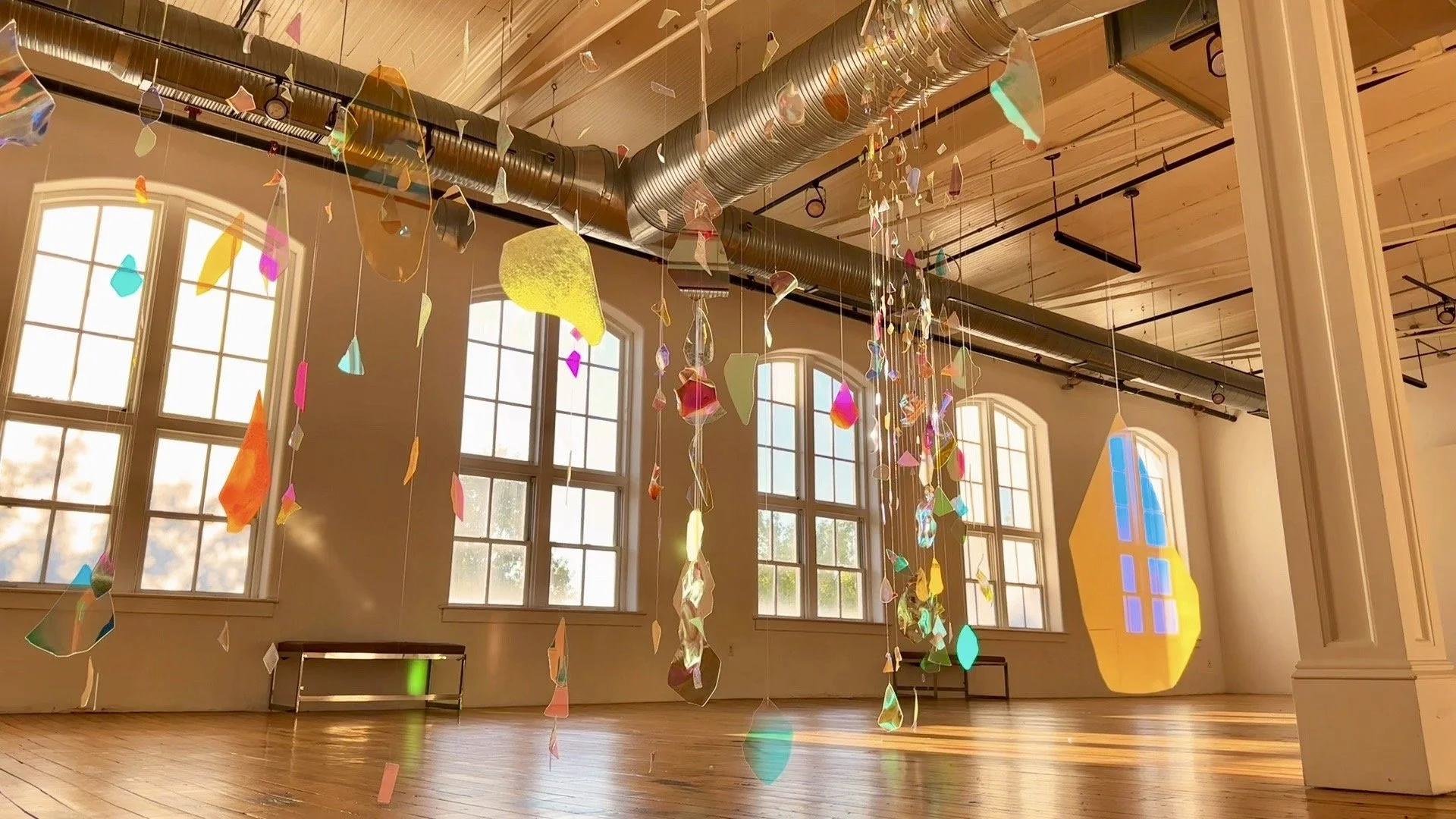
What is Dichroic Glass?
It All Begins HereDichroic glass doesn’t simply display color—it transforms light. Learn how this aerospace-born material creates shifting reflections, and why I use borosilicate glass for its clarity, strength, and depth.
And why I choose borosilicate for every piece
Most glass shows you a color.
Dichroic glass does something else entirely—it interacts with light.
Instead of holding a single color, it reflects and transmits multiple wavelengths at once. That’s why it appears to shift—moving between hues depending on angle, time of day, and the quality of light in the room.
It’s not painted.
It’s not coated in the way most decorative glass is.
It’s engineered.It’s engineered.
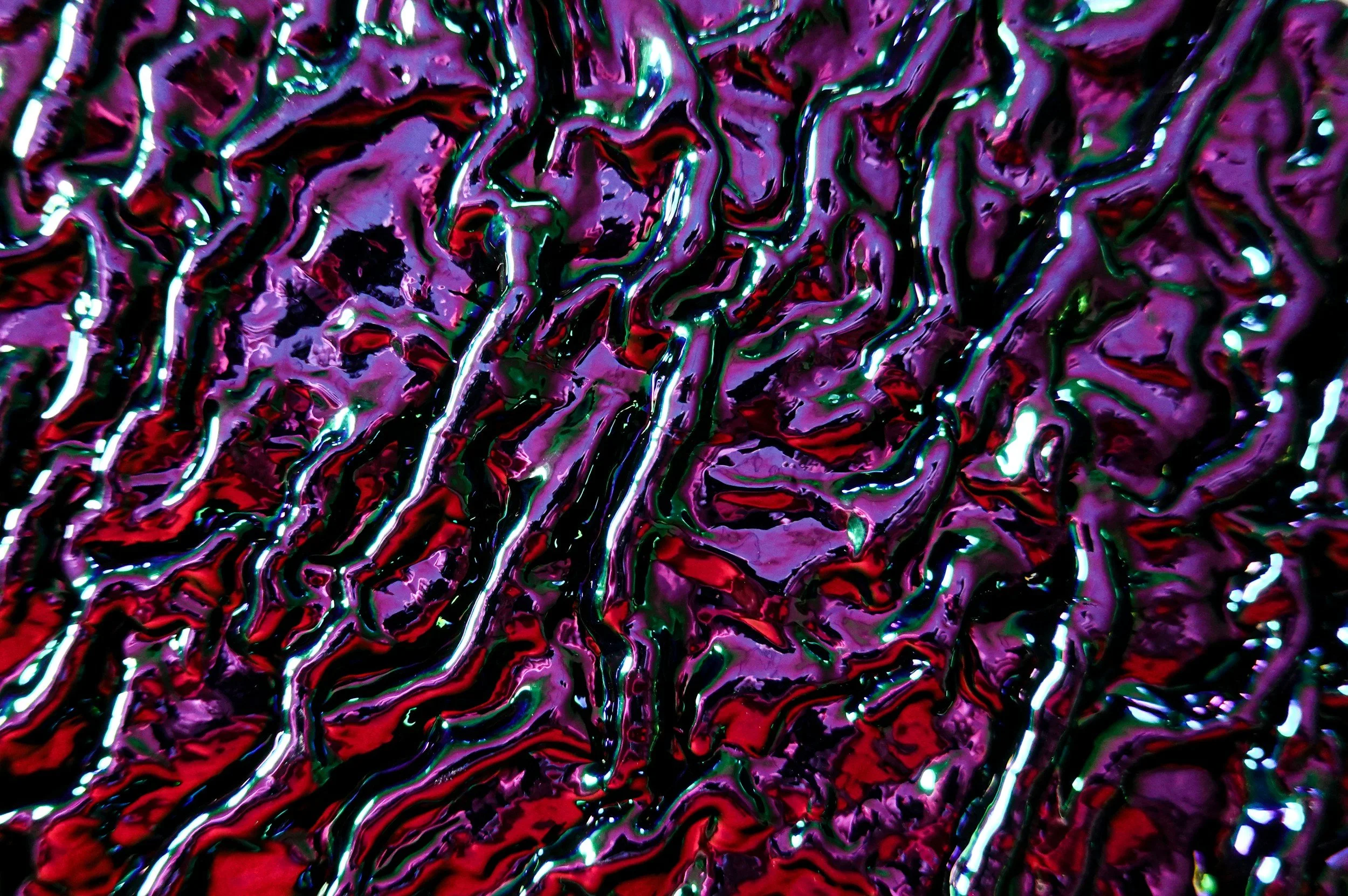
detail of crinkled dichroic glass
A Material Born from Science
Dichroic glass was originally developed for aerospace and optical applications—used in lenses, filters, and instruments that required precision control over light.
The surface is created through a process called thin-film deposition, where microscopic layers of metal oxides are bonded to the glass at extremely high temperatures.
The result is a surface that doesn’t just display color—it splits light.
When sunlight passes through, part of the light reflects back while the rest continues through the glass, creating layered color, depth, and movement that can’t be replicated with traditional materials.
Why I Use Borosilicate Dichroic Glass
Not all dichroic glass is the same.
For my work, I use borosilicate glass—a material chosen intentionally for both its strength and clarity.
Borosilicate is known for:
Exceptional durability – far more resistant to cracking than standard glass
Thermal stability – it can handle rapid temperature changes without stress
Clarity – allowing light to pass cleanly through, enhancing the dichroic effect
This is the same family of glass used in laboratory equipment and high-end lighting—not because it’s trendy, but because it performs.
For you, that means:
Stronger, longer-lasting pieces
Cleaner, more vivid light reflections
A material that holds up in real living spaces
Why It Feels Different
There’s a reason people pause when they see it.
Dichroic glass doesn’t behave like a static object—it’s responsive.
It changes with the sun, with the weather, with the movement of air.
Morning light creates something soft and layered.
Midday light becomes sharp and vivid.
Evening light turns everything warmer, deeper, more atmospheric.
The piece stays the same.
The experience doesn’t.
Light as a Living Element
What I’m creating isn’t just glass—it’s a way of bringing light into your space as something active.
Something that moves.
Something that shifts.
Something you notice differently every time you walk past it.
That’s the real material here.
Not just glass—
light, in motion.
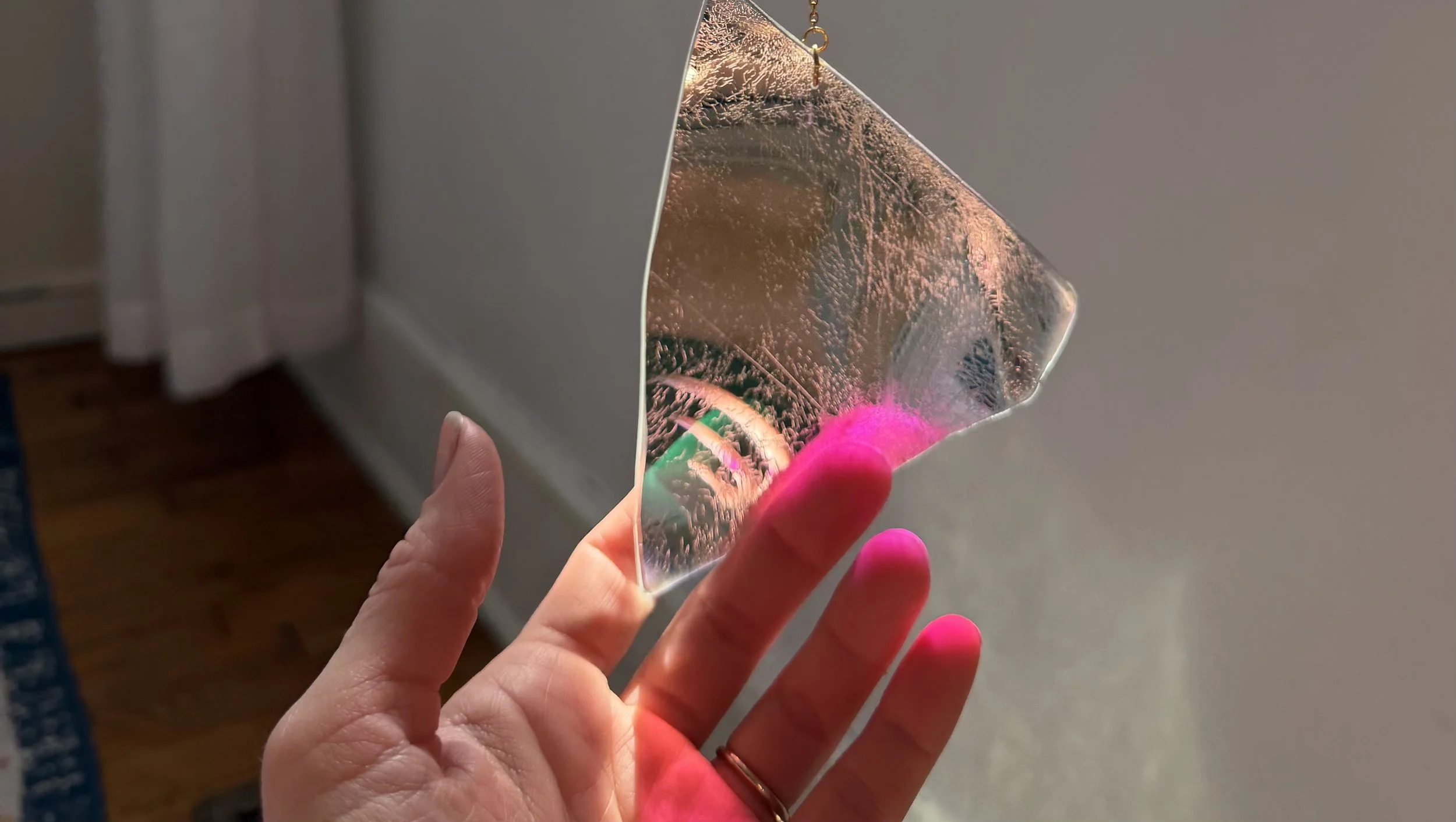
kiln-fired dichroic glass
Explore the Work
If you’re here, you’ve already seen what it can do.
Now you know why it does it.